
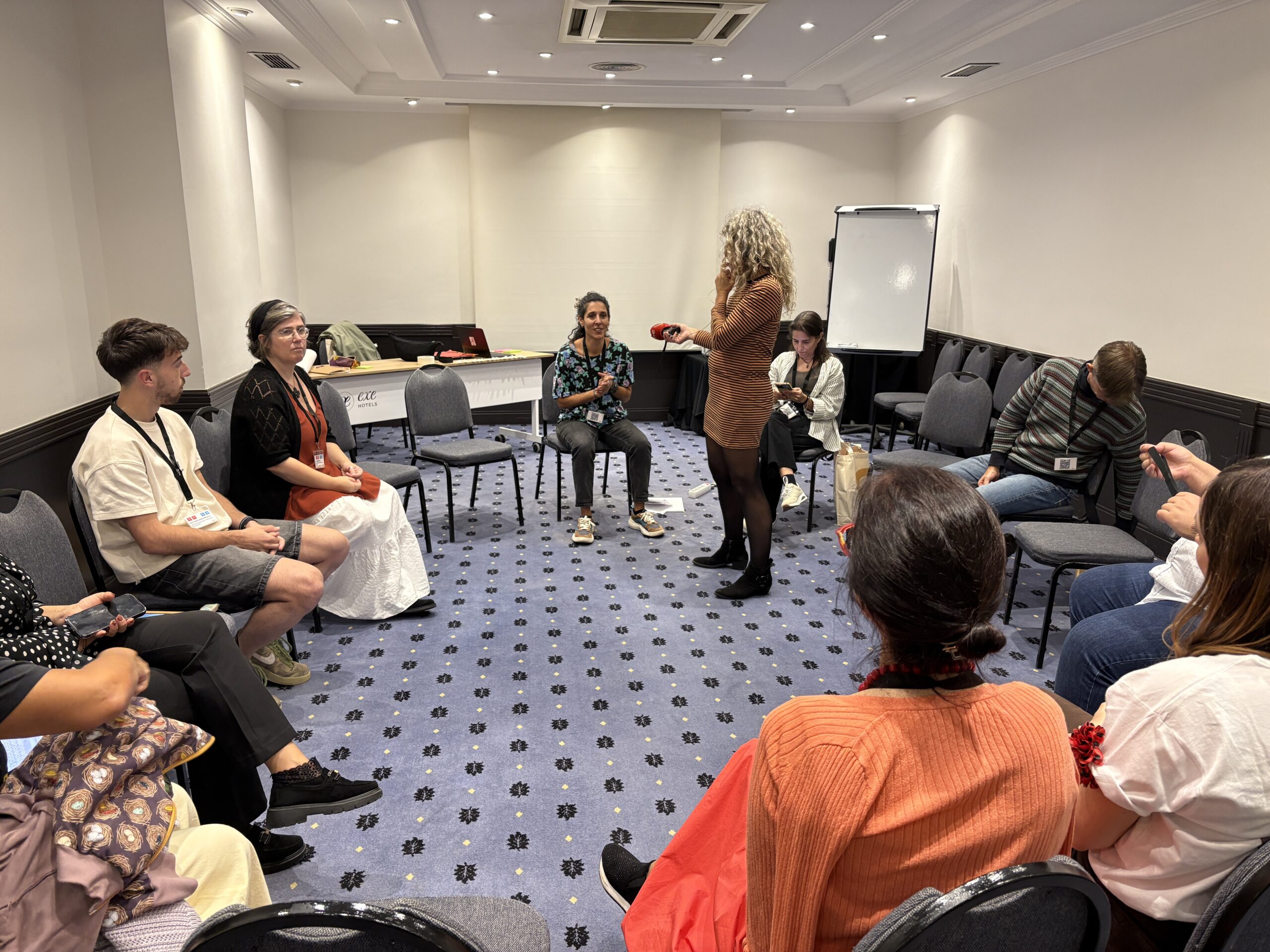
Following the third GET international seminar, held in Seville on 21–22 October, we invited participants from across the partnership to give voice to their reflections on the experience. From inspiring encounters and meaningful exchanges to practical insights and new ideas to take home, each team came away with something valuable to share.
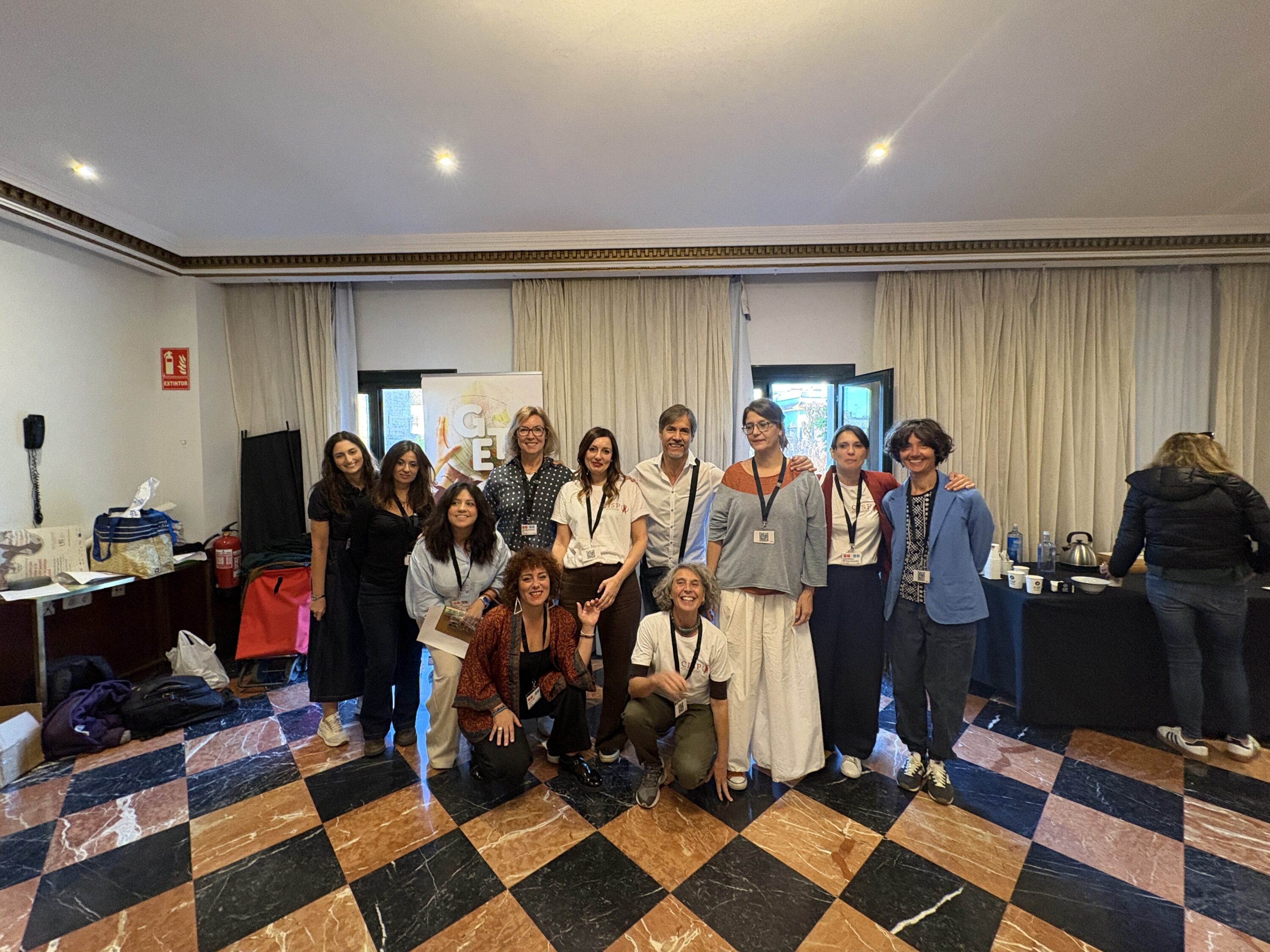
The GET Italy team flew to Seville from three different regions (Lazio, Sardinia and Sicily), accompanied by teachers involved in the project activities. Giordana Francia from CISP, project coordinator, summed up the seminar’s focus on youth activism:
“Together with the Spanish partner CAONGD, we designed the event by building on the questions and needs that have emerged, and continue to emerge within the partnership, as we work together to implement youth-led initiatives across Europe. We focused on questions such as: How can we relate to younger generations? How can we foster a sense of agency in young people? How should we interpret the support we provide as educators?”
For OSVIC, the seminar was a valuable opportunity to meet and exchange with other organisations, hear first-hand about young people’s experiences of taking action, and share the work initiated in Sardinia. It also offered a chance to contribute to a wider international space for dialogue and mutual learning.
The Associazione Luciano Lama adds: “We found the young people’s testimonies particularly meaningful. They shared their first-hand experiences, showing how the project can have a tangible impact on school life and help raise awareness among young people.” Find out more on the GET Italy website.
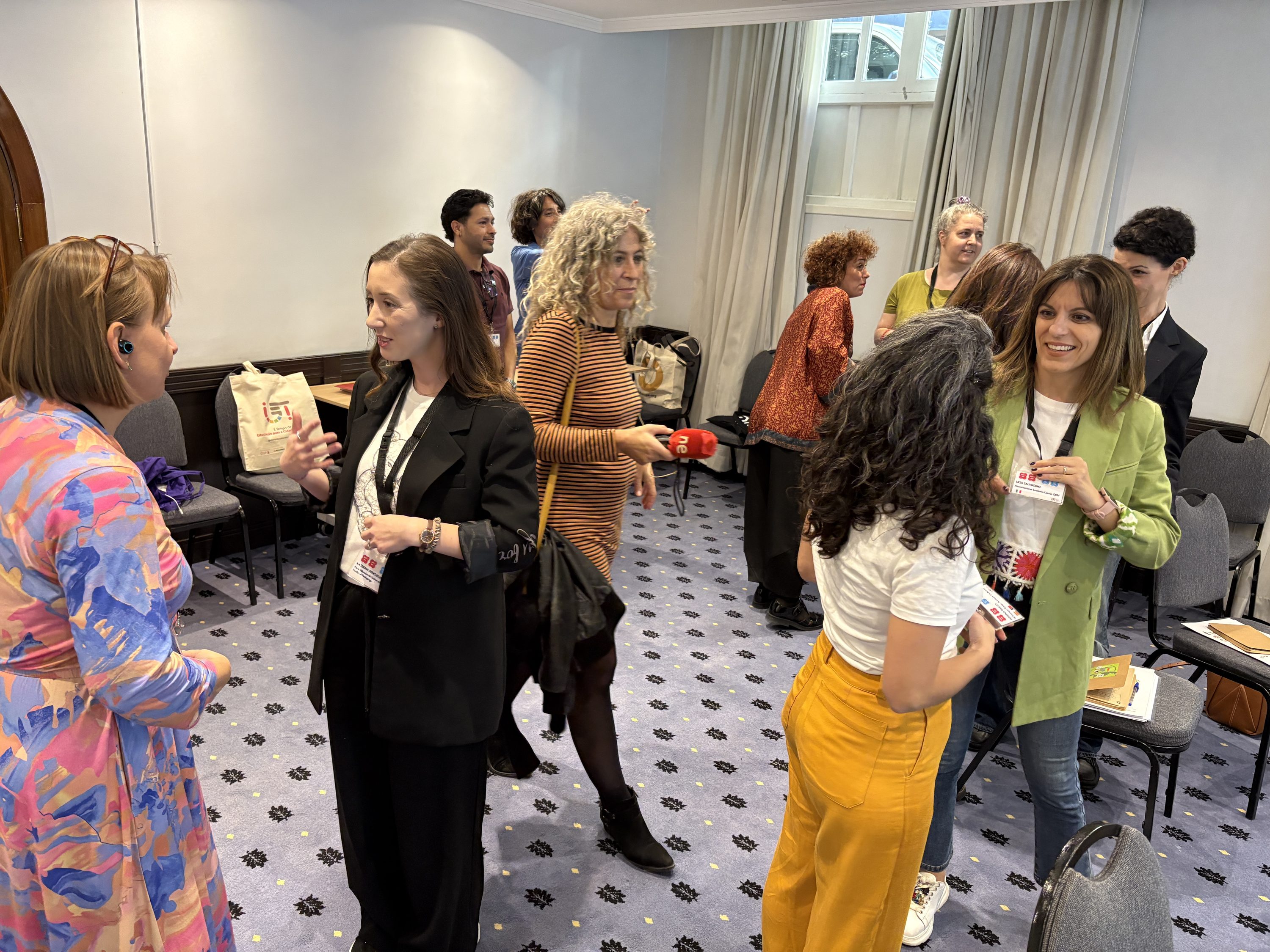
One of the themes that came up repeatedly during the seminar and in the reflections of the Czech participants was the importance of genuine youth participation. It is not enough to simply offer young people ready-made activities or tell them that they can change the world. What matters is giving them the space to come up with their own ideas, make decisions about their projects and actively take part in putting them into practice.
“What I am taking away above all is the conviction that it is important to give pupils more room for their own initiative and to connect their ideas with concrete activities in the local community,” says Alena Zina Janáčková from the Secondary School and Grammar School in Moravské Budějovice.
The participants also had the opportunity to explore what this kind of support can look like in practice during a workshop focused on planning student-led projects. Veronika Hypšová from ARPOK describes her experience: “At the end, we focused on the role pupils should play in the whole process. They should be the ones leading the process and carrying out the activities.”
Johana Krajčírová from ARPOK also took away practical tools for supporting young people in their initiatives: “In terms of my work, I am taking away tips and tools on how to support young people in developing their own ideas and taking action on global challenges in a participatory way.” Eva Kučerová from E. Nápravník Primary School in Býšť also took away a practical example of how to develop children’s ideas: “Together, we came up with ways to enrich the activities – for example, by creating educational panels or themed booklets about animals.”
Lenka Pánková from ARPOK shares a similar view: “What really resonated with me was how important it is to genuinely let pupils take part in their projects and give them space and freedom to make their own decisions. This is something we all need to work on.” And Eva Tomanová from Svatoplukova Primary School in Šternberk sums up her experience: “An inspiring conference full of great activities and lovely encounters, which showed me how important it is to stop serving everything to pupils on a silver platter and instead let them come up with their own ideas and perspectives on the world.”
Discover more about the Czech team experiences by reading the full story on the local website.
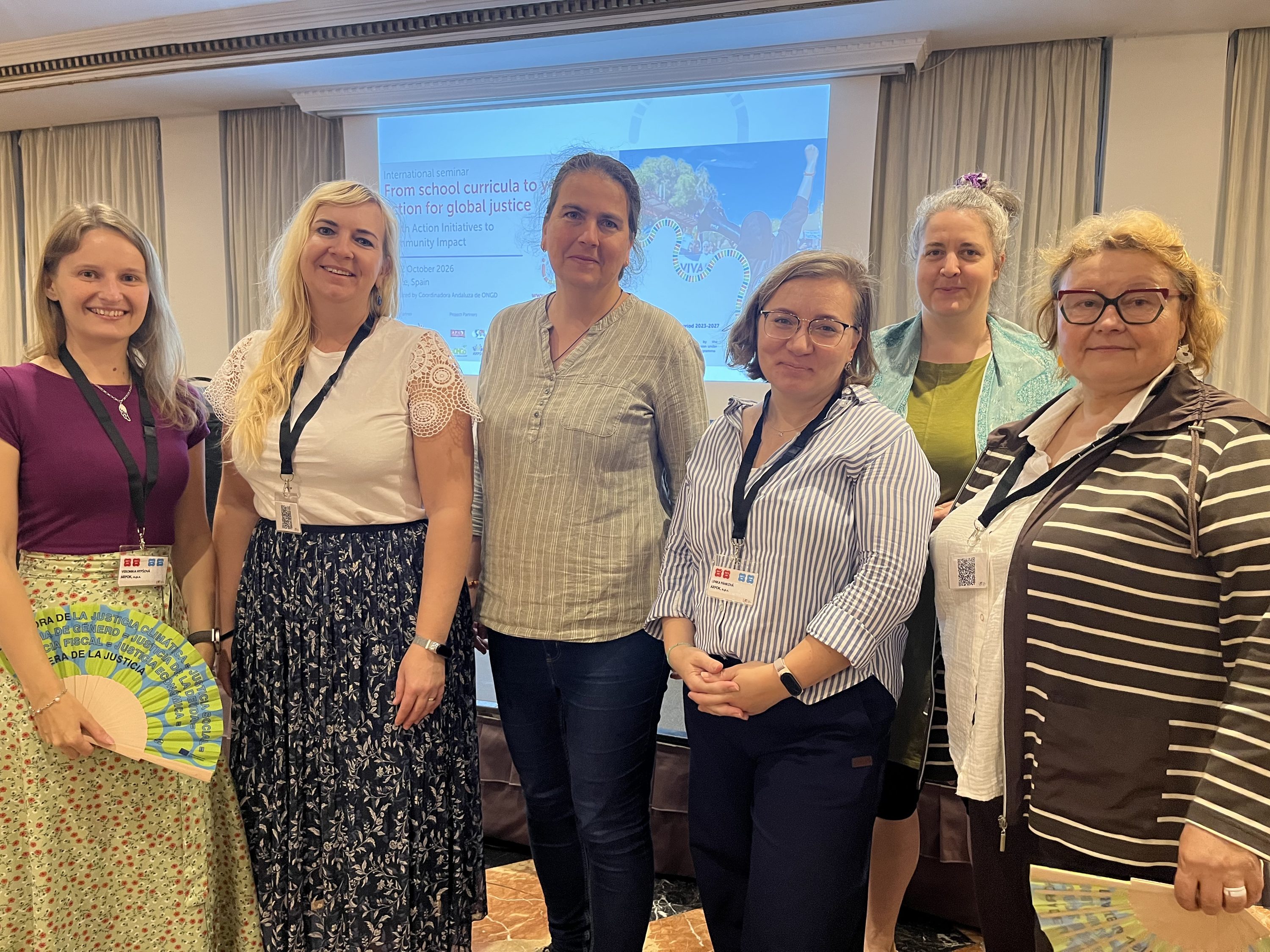
The GET Portuguese team in Seville was accompanied by a delegation of teachers from Lisbon and Viana do Castelo, as well as youth worker Joana Barreira and students from the Agrupamento de Escolas José Relvas – Alpiarça.
After the event, Portuguese teachers told that they felt that having the opportunity to experience other realities was very enriching; it allowed them to form new friendships and professional relationships and to think about possible projects.
“I love you” is the message that Carla Pires, Portuguese and Spanish language teacher at Agrupamento de Escolas Monte da Ola, shared with the panel speakers. Eva Cipriano, Sport teacher at Escola Secundária Marquês de Pombal added: “I’m leaving Seville with a very strong sense of connection among the people who are working for the good of our world, and a sense of peace that comes from knowing we’re not alone.”
Carlos Carrilho, Geography teacher at Agrupamento de Escolas do Concelho de Caminha, took home new strategies, ideas, and ways of thinking to put into practice both at school and in the community. He also took home, in his heart, a brotherly friendship with everyone who was there — “it feels like we’re one big family here”!
Discover more about the Portuguese participants and their experience in Seville on the GET Portugal website.
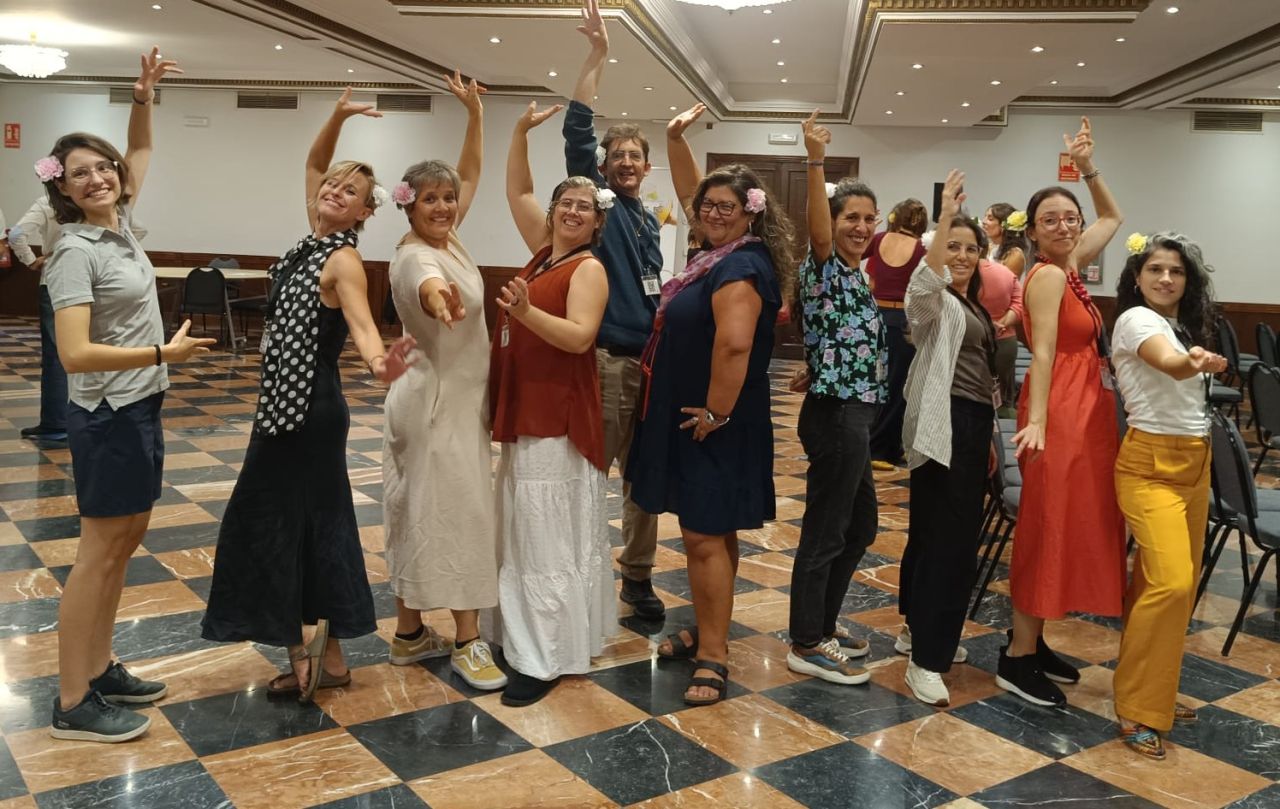
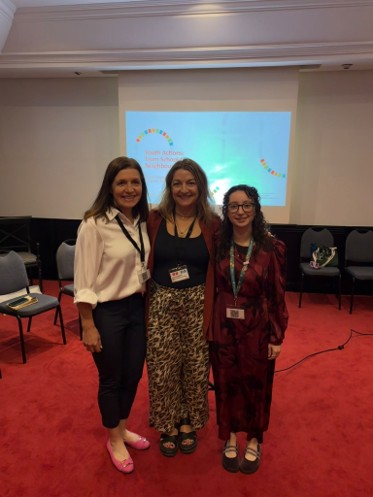
LeighAnn Mulrennan (Galway ETSS), Annette Keane (Coláiste Muire, Mayo), and Natasha Muldoon (ARD Resource Centre) represented Ireland at the GET seminar in Seville. They led a workshop showcasing approaches to youth action in Ireland and highlighted the importance of placing young people and their voice at the centre of their learning and action. Sharing experiences with European educators offered fresh perspectives on youth action and shared challenges.
LeighAnn described it as “an amazing opportunity to connect, learn from, share and discuss youth actions”, while Natasha returned with “new ideas and motivation”. Annette highlighted a shared passion for promoting Global Citizenship Education despite differing challenges.
These are just a few perspectives from the GET partnership. Visit our website and social media to explore more stories, access project resources, and see how GET promotes Global Citizenship Education across Europe.
