
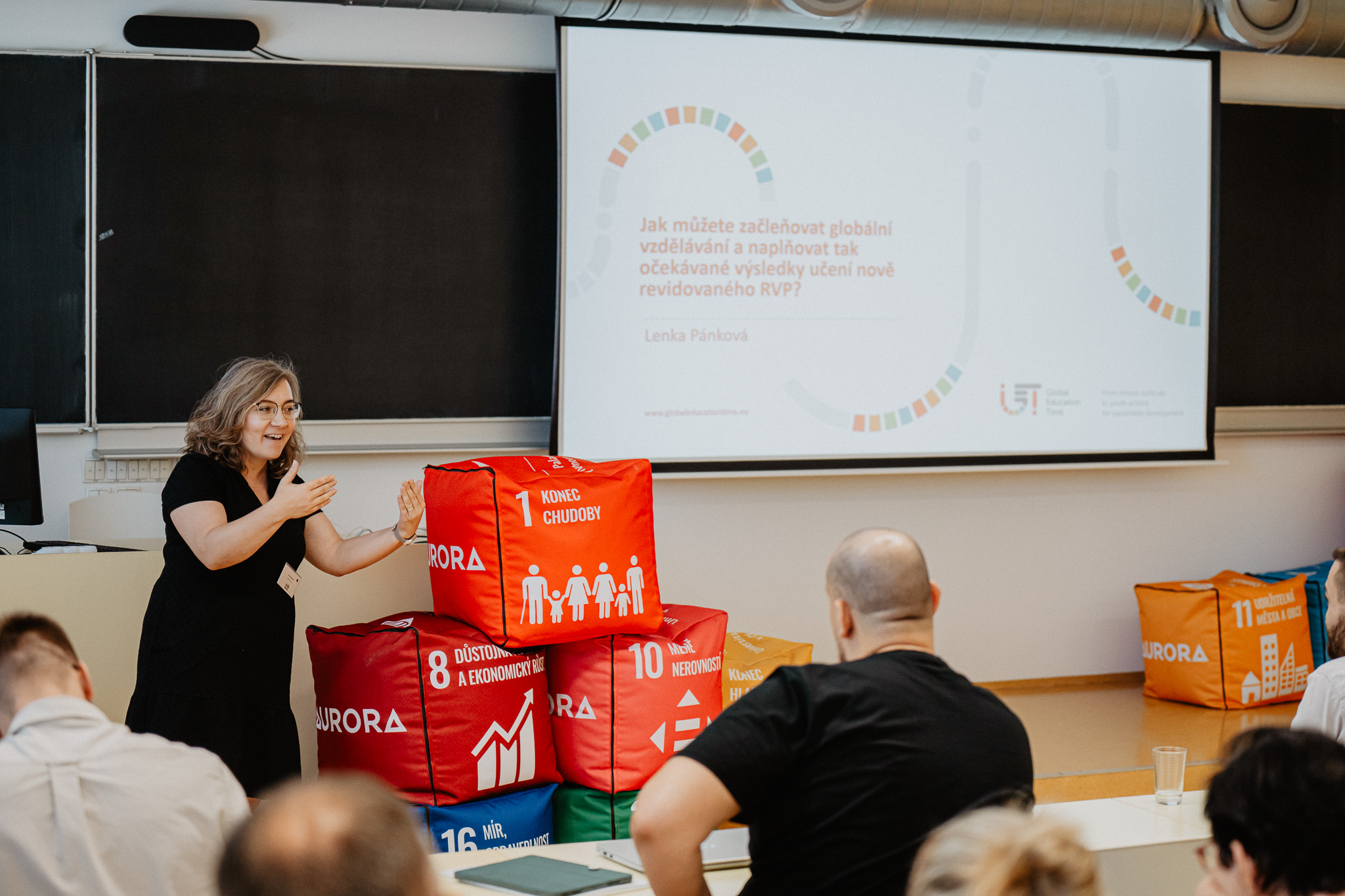
The afternoon programme of the conference was devoted to practical workshops. Some of the educational resources developed through the GET project were used during the sessions, giving participants an opportunity to actively work with these materials.
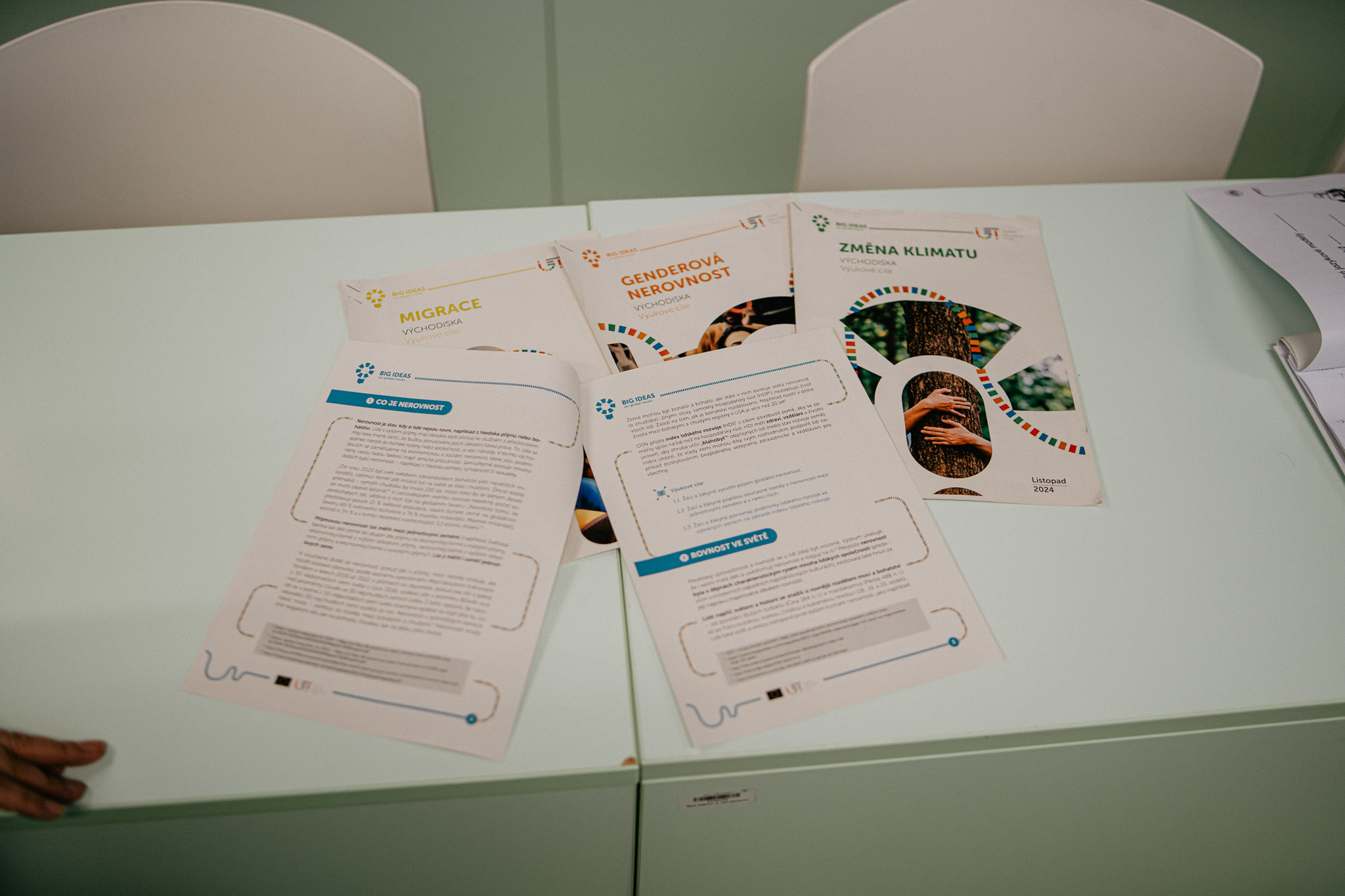
The workshop “How to Teach About… Sets of Lessons for Global Topics” introduced teaching resources designed to explore climate change, migration, global inequalities and gender inequality.
Participants experienced firsthand how the GET Teaching and Learning Units (TLUs) can be used to explore complex global issues, connect topics across subjects and develop students’ competences at the same time. The sets of TLUs are ready to use and include practical teaching methods, learning objectives and links to the Czech curriculum.
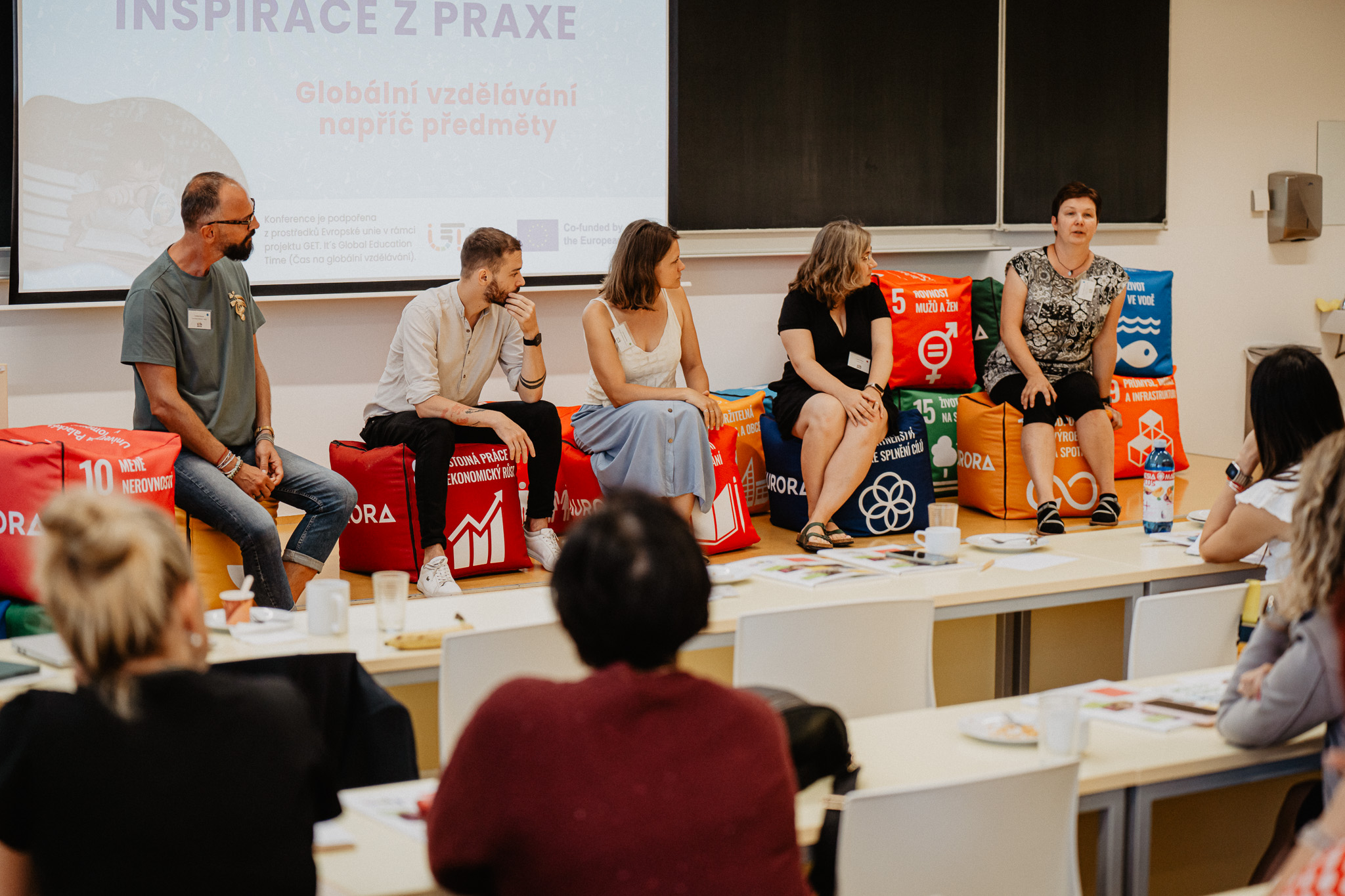
As one participant put it:
“I appreciated trying out the GET Teaching and Learning Units in practice, together with the comments and useful tips.”
Another workshop, “From Maps to Connections – How to Teach about Global Challenges” worked with the new textbook Global Geography of Social Challenges. Through texts, maps and collaborative activities, participants explored ways of developing critical thinking and literacy while helping students understand the connections between different global challenges.
This way, topics such as natural resources, conflicts and global inequalities become turn into opportunities for students to learn how to navigate the world, work with information, think about it in a broader context and develop their own perspectives on the world.
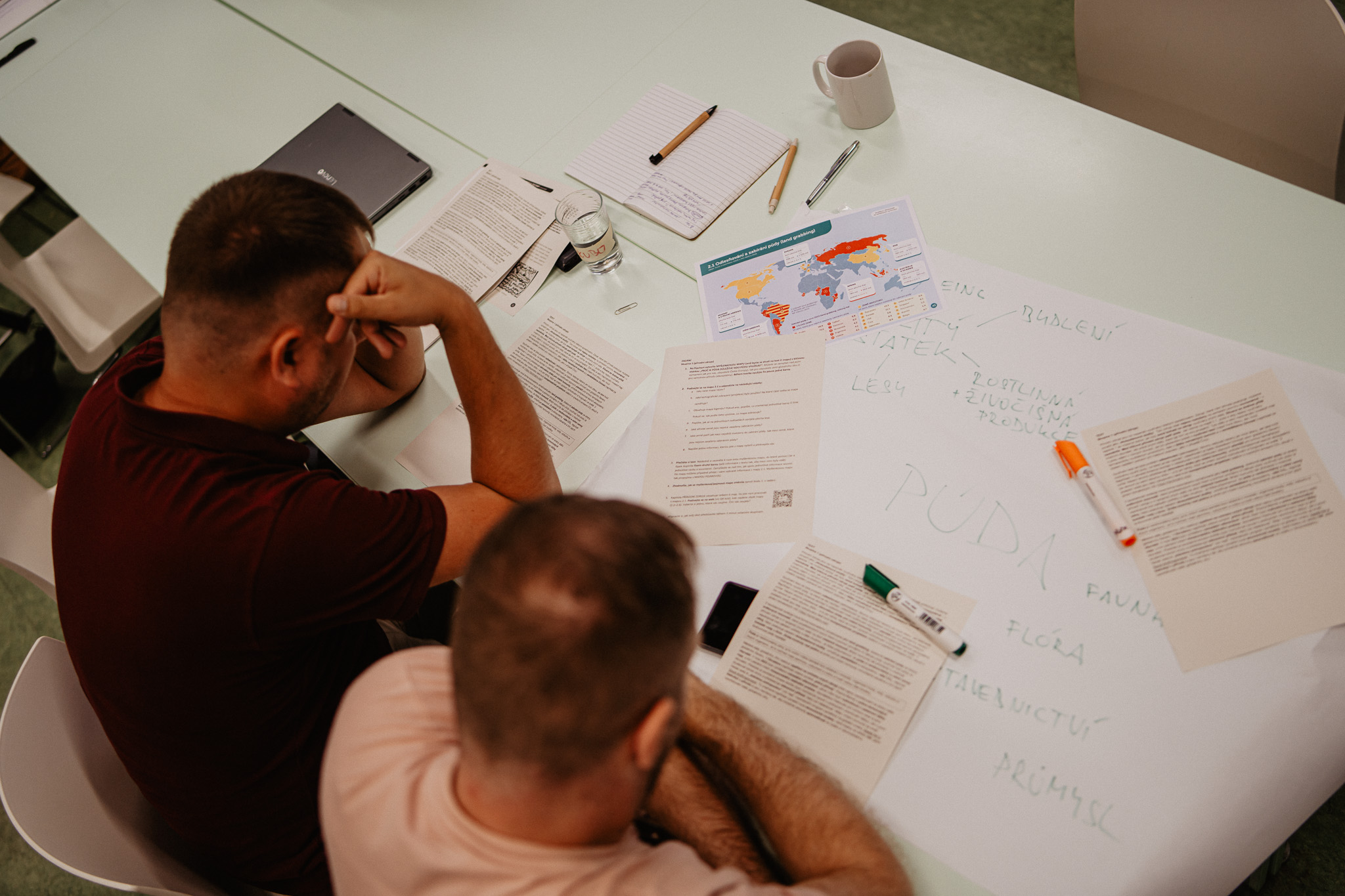
Another participant confirmed that our recently released maps have found their place in practical teaching:
“Fantastic maps – I will definitely use them in my teaching.
I was really excited by the topics the maps cover.”
The third workshop “Being Outdoors is Good for Body and Soul” offered a slightly different perspective. Romana Fialová from Sluňákov introduced ways of using time outdoors and contact with nature to support the wellbeing of both students and teachers. Participants tried out several techniques themselves and took away ideas they can use both in and beyond school.
This shift – from topics to competences – ran throughout the entire conference.
Global Citizenship Education (GCE) is not only about whether students learn something about climate change, migration, international inequalities or gender equality. What matters just as much is what they are able to do with this knowledge.
Can they identify connections? Work critically with information? Listen to different perspectives? Discuss and collaborate? Explore ideas for contributing to change?
This is where global education meets competences and the expected learning outcomes introduced by the revised curriculum.
“Global education is not some kind of ‘extra’. It is a way of teaching children to see connections, think critically, listen to different perspectives and look for ways in which they themselves can make a difference”
Lenka Pánková, ARPOK
The journey from topics to competences begins in the classroom – with a question, a lesson, a discussion or a situation that gives students the opportunity to think, make decisions and take action.
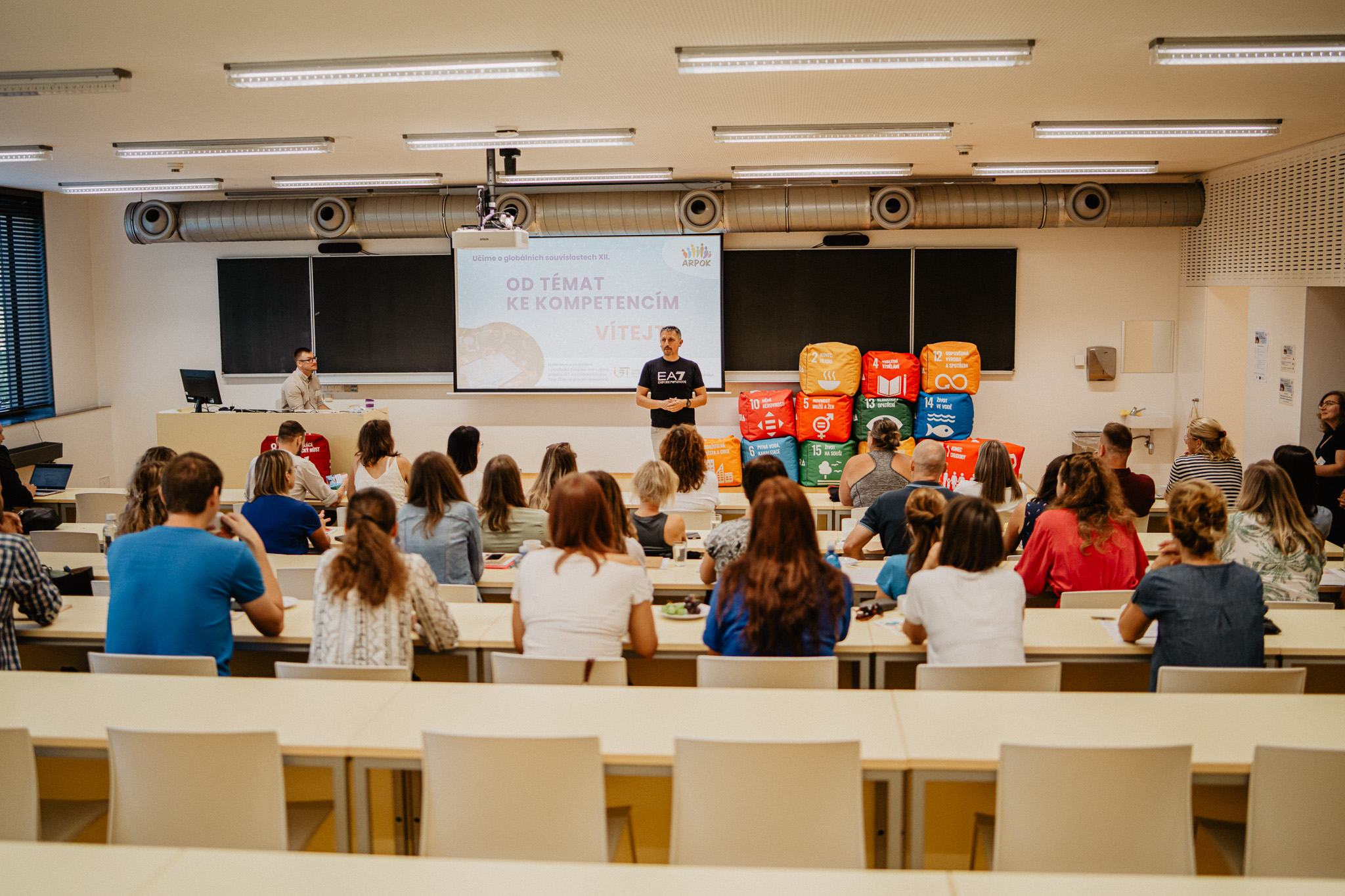
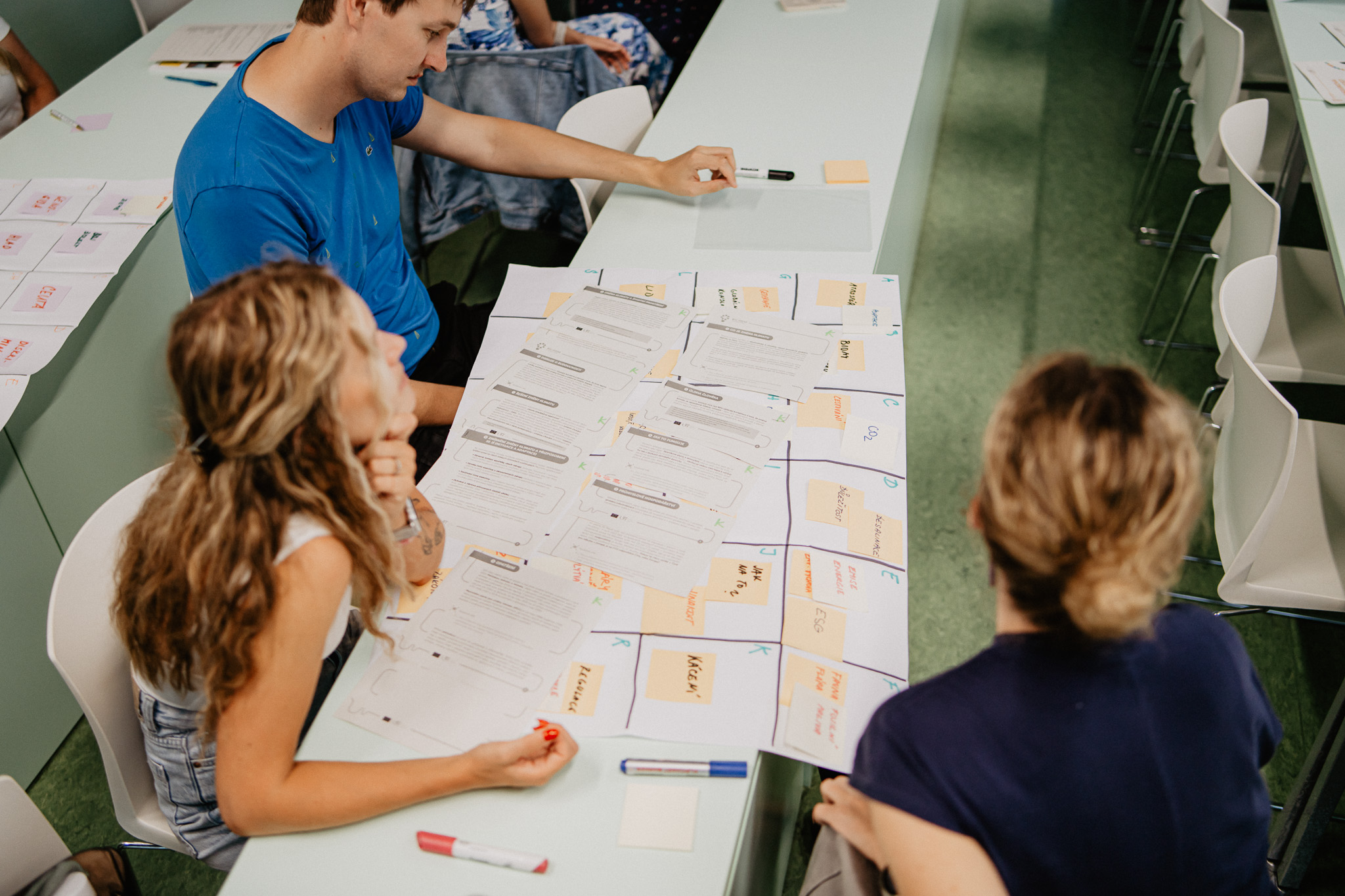
The twelfth edition of Learning about Global Connections was not only about presentations and workshops. Equally important was the opportunity to meet, share experiences, talk during breaks, look for solutions together and reflect at the end of the day. Educational change does not happen through new materials alone; it requires also teachers who are willing to try new approaches, share their experiences and learn from one another. This was exactly the spirit of this year’s conference.
Participants left with new materials and notes, as well as concrete ideas, experiences and tools to bring to class, new contacts and the feeling that they are not alone in their work with global connections. As one of the participants said:
“I am taking away methods that I can use in my teaching and in workshops for adults and in training teachers. I just need to adapt them a little.”
Bring these ideas and global issues into your classroom! Download the free educational resources developed by our project across Europe. Give your students the tools to understand the world and become active global citizens.
Photo credits: Jakub Wittka.
