

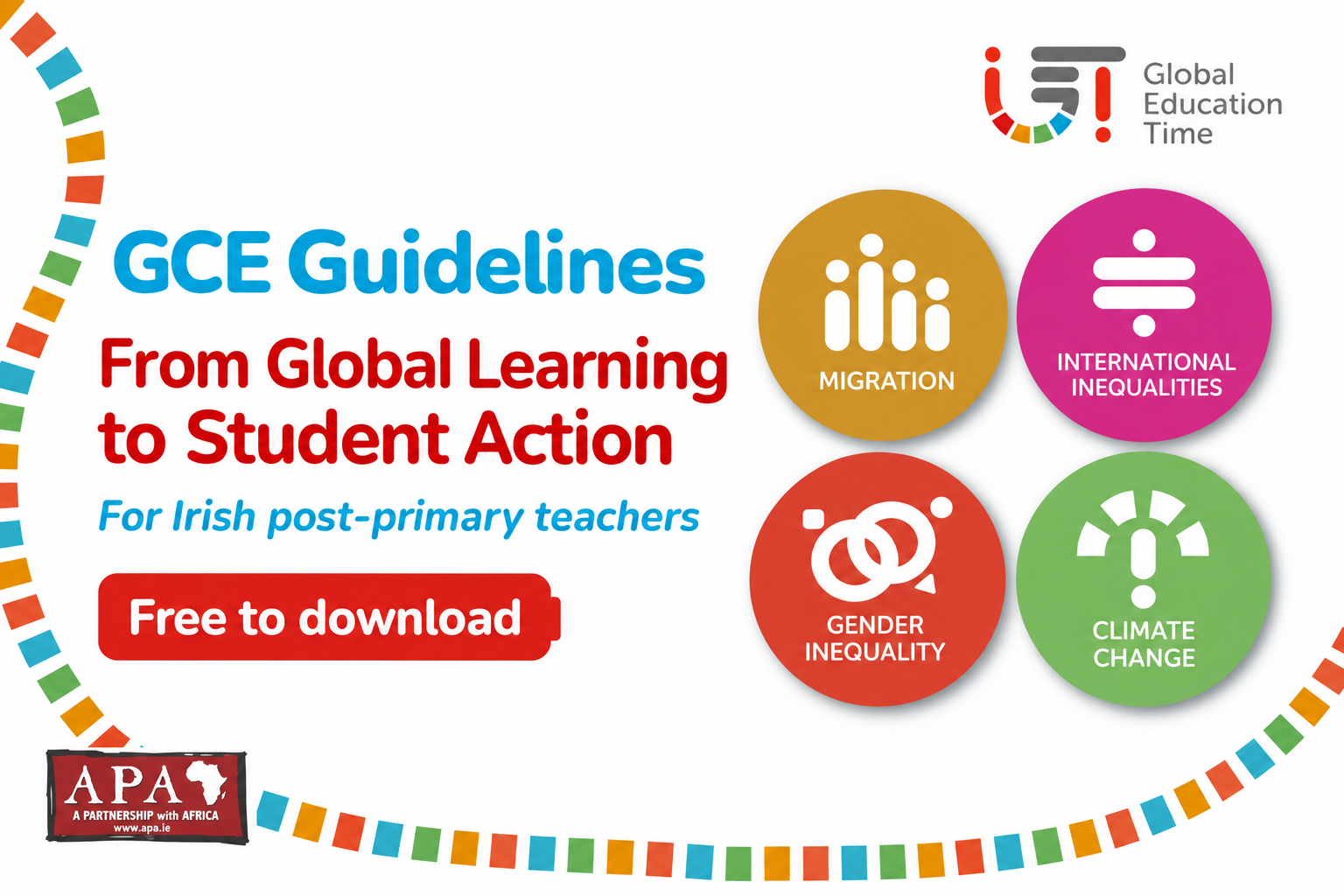
We are delighted to launch From Global Learning to Student Action, our new Global Citizenship Education (GCE) Guidelines for Irish post-primary teachers, available as a free download.
Developed in partnership with the Ubuntu Network, which supports Global Citizenship Education in initial teacher education, this practical guide helps post-primary teachers bring global issues into everyday classroom learning.
Whether you are new to GCE or already exploring it with your students, the guidelines offer accessible starting points for a range of Junior Cycle subjects, Transition Year modules and learning across the curriculum.
The guide includes:
The guide encourages students to Think, Connect and Act: question global issues, explore different perspectives and consider informed action rooted in solidarity.
Teachers can start with one activity, adapt an approach for their subject or use the guide to develop a GCE module. Practical guidance supports inclusive participation and respectful discussion. The guide also includes advice from experienced teachers on bringing GCE into classroom practice.
Download the free guide here: From Global Learning to Student Action
